Search Results
85 results found with an empty search
- What is an accessible house?
New Zealand is a small, progressive country with a population equivalent to Alabama. It has adopted a national policy towards home accessibility renovations and is promoting new accessible and universal housing as well. Our friends at LifeMark put less emphasis than we do on the mainstream marketability of universally designed housing. But, they have a national certification program that we have yet to launch fully. This piece from them explores some of the challenges they are facing when attempting a national standard and common definitions of accessible and universal housing: It’s a simple question. What is an accessible house? Let’s look at where we can get a simple answer. The New Zealand standard for access and mobility is NZS 4121, last updated in 2001. There are definitions to assist with the design standards, but only in commercial spaces. There is no standard for residential buildings, so no standard for an accessible house. The Building Act of 2004 establishes performance standards to ensure reasonable and adequate provision for disabled people, but these standards do not apply to housing. The review of the Building Act also excludes accessibility and the accessible house. The Resource Management Act (now under a 2-year review) could require new developments to meet an appropriate condition such as accessibility, but then it would have to define this and so on both accounts, the accessible house is again excluded. The Lifemark® organisation gifted a set of voluntary Universal Design standards to the country in 2012 as a mechanism to define what how an accessible dwelling would perform. This was supported by a review process and an updated set of standards in 2016. Several councils now use this process to encourage the development of more accessible homes. Many private sector organisations also use this service and deliver accessible housing, however many do not. A number of new developments are now on the market offering hybrid solutions. As one builder recently said to me “we are incorporating some Universal Design features” . The problem was that those features were chosen by the builder. This meant that the accessible bathroom was on the second floor, with only stair access to that floor. “This is not Universal Design” I replied, “well, it’s what the client wanted” I was subsequently told, “it's an accessible home according to the building code” . Which is double speak and means that as there is no definition of accessibility in that code then any definition will do. The tragedy is that the world helped define an accessible home decades ago. The Lifemark® standards are based on global best practice and now many countries have those definitions enshrined in legislation that requires compliance, rather than rhetoric. A decent home is described by the human rights commission as being habitable, affordable, and accessible. Let’s not waste years needlessly debating what this means and, in the meantime continuing to advance ableism. As a starting point for most residential developments, if you can’t wheel into a home, then it isn’t going to be accessible. It’s that simple. As always please feel free to contact me on geoff@lifemark.co.nz as we promote Universal Design to help everyone live the life they want.
- The Green Side of Universal Design
Universal housing integrates well with the sustainability movement by connecting goals of environmental ecology with the goals of social ecology or social sustainability. Universal homes result in better physical and mental health and are the starting point for all of us in maintaining our connections to family and community life. Combining sustainable and Universal Design elements results in a healthier, safer, and inviting environment for all who interact in the home. Current users can enjoy these benefits for longer than a similar home that does not design for human performance characteristics. Homes that are constructed of durable and sustainable materials require less maintenance over the lifetime of the home, which benefits future occupants. Low maintenance also meets the Universal Design goals for ease of use and convenience. A Universal Design approach also enhances social sustainability because people who live in UD homes can maintain their engagement with family and community life without undertaking costly and disruptive functional renovations. On the sustainable front, minimized modifications save natural resources by avoiding the use of significant amounts of building materials that would otherwise be required by extensive home accessibility modifications. Check out our easy to reference guide, here!
- Policy Fundamentals For Livable Communities
People of all ages and ability levels need communities where they can thrive and lead meaningful lives. Communities should be designed to promote physical independence, dignity and opportunities for community engagement and choice as people age. We love all three of AARP's overarching goals for Livable Communities: mixed-use communities, mixed-income housing, and our favorite - Universal Design! For full article CLICK HERE
- Multi-Generational or Not
This article showcases an example of a long, narrow, rectangular tear-down home in a pretty high density urban setting. My rule of thumb is that it is more difficult to organize space efficiently in long rectangular dwellings: the inevitable hallways take up a lot of space. We like multi-generational living and live/work settings too. We don't know the details of this home's bathroom design and other areas. One glaring problem: interior stairs really make this home difficult for lifelong use without adding a ramp. Full Article here - https://bit.ly/3esgL4w
- To Bidet or Not to Bidet
We have worked with AARP for years and have had the privilege to participate in several of their regional and national programs. Early this year they conducted an online seminar where the participants were encouraged to ask us questions regarding home modifications and remodeling. We have compiled the questions and our answers in this series, hoping that this will help get you started thinking about your accessibility options. This week we will discuss: Are Add-on Bidets easy to use and effective? They are! Very popular in Europe and internationally, bidets have been growing in popularity in the US for many years. They work great for everyone and are especially helpful if you are having challenges with toilet hygiene for any reason. They are becoming well received by older adult households as well. Originally, they were only available as an additional fixture in a bathroom. You can still get free-standing bidets. These days, you can also get bidet add-ons that replace the toilet seat and lid - so you don’t have to remodel your bathroom or replace your toilet. Add-on bidet seats work best with an electrical outlet located near (preferably behind) the toilet so that you can plug it in to warm the water. Otherwise, you’ll have to use an extension cord, which may get in the way and be a tripping hazard if you are not careful in how you secure it to the floor/baseboard. You will need to specify one that fits the size and shape of your particular bowl. If you are handy you can even install it yourself. You’ll need to remove the existing toilet seat then install the bidet seat. The trickiest part will be to make the connection to your water supply, which may require a trip to the hardware store for the right connection. A plumber or handyman can also do the installation.
- Six Key Residential Wellness Design Trends For 2021
We like all six wellness trends but especially these three: 1. Indoor air quality - Covid or not, we spend a lot of time indoors; 2. Lighting - homes are badly lit. We need more footcandles without glare; 3. Smart home technology - we can use it to manage the household and for health status monitoring. Thanks to Forbes for this article.
- You Have Questions, We Have Answers
We have worked with AARP for years and have had the privilege to participate in several of their regional and national programs. Early this year they conducted an online seminar where the participants were encouraged to ask us questions regarding home modifications and remodeling. We have compiled the questions and our answers in this series, hoping that this will help get you started thinking about your accessibility options. This week we will discuss: Exterior Entry Options I don’t really like the look of ramps installed on the front of a home, but I can’t get up the steps. Are there alternatives? Many of the ramps that we see in our communities are basic and unattractive, often unpainted. This is not very good advertising for a very common and useful item that many people need. So, first of all, consider a better looking ramp design; one that matches the style of the home and its porch rails and color. Also, ramps might fit inside some attached garages, where appearance is not so important. Our book: Wood Ramp Design on our website will help you get started. The book also briefly covers vertical platform lifts, which take up much less space than a ramp and might be able to be hidden better than a ramp. Another option is an exterior-quality seat lift that can be installed on a set of stairs. Keep in mind that if you use a wheelchair you will need to transfer on and off the lift at the top and bottom. Mobility equipment of any type will need to be available at those locations too. Finally, consider creating a graded entry to a doorway. A gentle sloping pathway is easier to landscape, doesn’t need to be hidden, and will be a permanent value-added improvement to the house.
- Innovative solutions for Universal Design (isUD™)
By Danise Lavine - Architect & Assistant Director at IDEA Center Universal design has long been embraced by businesses eager to create safer, healthier and more supportive facilities for their employees and visitors, regardless of age or ability. The challenge for many is how to make it happen. The University at Buffalo’s Center for Inclusive Design and Environmental Access (IDEA Center), a world-recognized pioneer in the field, hopes to push universal design into standard practice with a new research-backed assessment and certification program that walks users through the entire process, from planning the project, through building design, and including facility operation. More than 500 illustrated design solutions and best practices developed by the IDEA Center over the course of almost four decades are packed into the program called isUD ™, or innovative solutions for Universal Design . The program guides clients through a menu of design solutions and tracks progress toward meeting the goals of universal design through an automated scoring system, while providing design options to attain credits toward certification. Buildings that earn sufficient credits are eligible for isUD™ certification, complete with a plaque worthy of lobby display. One of the earliest isUD projects, and the first museum to receive isUD™ certification, was MuseumLab™. A major expansion project of the Children’s Museum of Pittsburgh, MuseumLab™ was designed specifically for children ages 10 and up, with a focus on providing visitors the ability to work with makers to create new products, technology, and art. In addition to its commitment to creating an inclusive environment for all, the design team was also focused on preserving the charm of the former Carnegie Free Library building and revitalizing much of the historic 1890 structure, demonstrating that universal design solutions are not limited to new construction. Another early adopter of the isUD™ program was the Hampton Inn Buffalo-Amherst. This newly-constructed, 107-room hotel is located adjacent to a multipurpose sports facility and was designed to deliver an enhanced experience to all guests, including athletes of all abilities and their families. As the first hotel to receive isUD certification, the building features a variety of guest room types which include accessible rooms, Universal Design rooms and Standard+ rooms. All of the different room types include universal design features and other added amenities. Other notable universal design features that support a wide range of needs and preferences include oversized circulation paths and primary routes of travel, generous clearances and turning spaces within sleeping rooms and bathrooms, a comprehensive wayfinding system, flexible meeting spaces and hotel staff is trained to assist guests of all abilities. Both projects are featured on the isUD™ website at https://thisisud.com/featuredprojects To date five projects have been certified and an additional five projects are currently in process. To sign up and learn more about the isUD™ certification program visit: https://thisisud.com/ To learn more about the work being done at the IDEA Center visit: http://idea.ap.buffalo.edu/ Or follow us on social media: Facebook @ideacenterUB | Instagram @idea_center_UB
- Australian Tiny Home for Older Adult
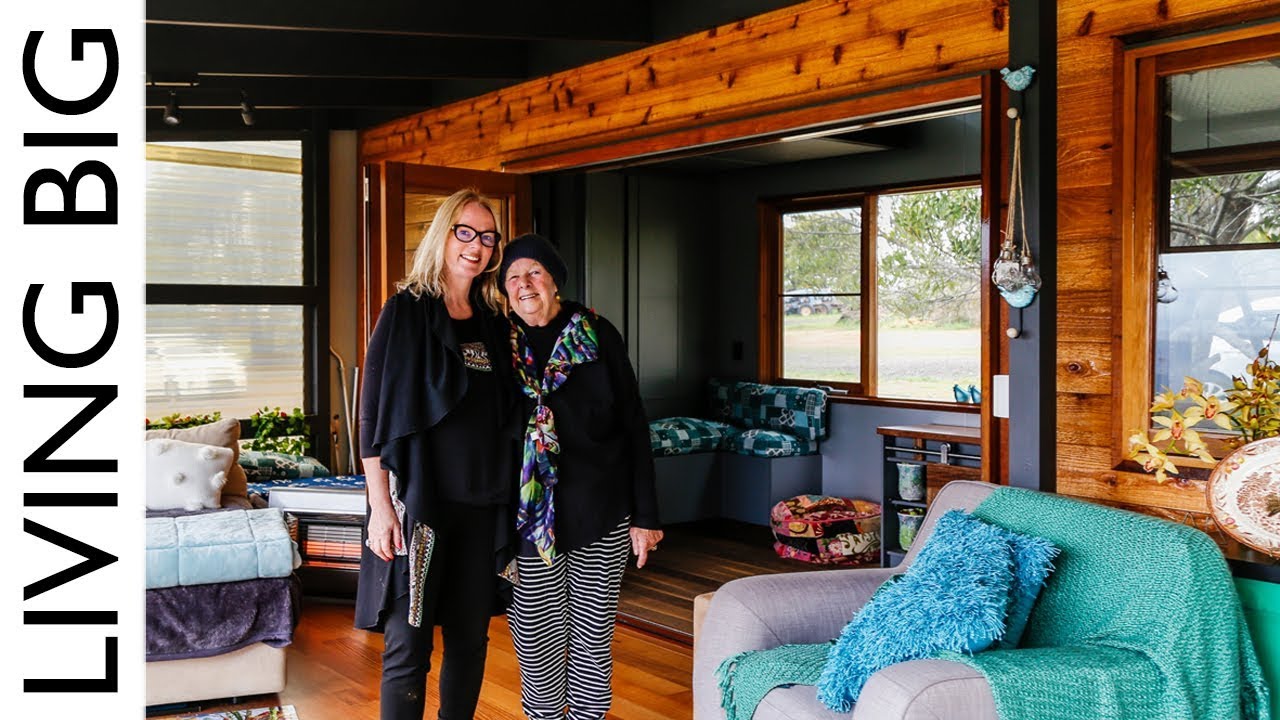
What an interesting video. Here are my thoughts. Small homes may not have tiny price tags. The US $116,000 is way less than a standard home, but it is still $116K. And I don’t think it included the custom design, utilities or land costs. Living in a warm climate really helps. The very large enclosed porch add-on made that project possible. Without the additional space, the dwelling would indeed be tiny. Perhaps access to outdoor spaces is integral to all successful tiny homes? Problem that I saw: Not actually accessible for someone who uses a wheelchair. The ramp is way too steep. Even without snow and ice (and with a very slip resistant surface) it looks harder than it needs to be for an older adult with a walker. It could have easily been made longer. And if she were to use a wheelchair, her independence is gone. The interior of the actual home does not accommodate someone who uses a wheelchair. It barely accommodates her with her walker. Kitchen: forget about it. Bathroom: no way. This is one of the limitations of Tiny Homes: They can’t actually be tiny and be accessible for someone who uses a wheelchair. 350 sf is the smallest dwelling that we’ve seen that works. 350 sf is not a tiny home and fits more or less into a viable accessory dwelling category. 400 sf is much better. And the kitchen/bath area is so small that a caregiver/assistant wouldn’t fit either. This may address the larger question that if an older person needs to use a wheelchair, they will probably need a bunch of assistance and may not be able to live independently anyway. In the case of the video, perhaps the plan is for her to move out if such a thing happens? What I liked: The sliding wooden door that turns into a table. Nice flexibility, how heavy is it for her to use? Like the vertical grab bar in the shower with the hand held shower attachment. It is sturdy enough to be useful and safe. Descending bed. I’ve seen this before and it is pretty awesome. We don’t mind murphy beds or moveable walls either. Smooth floor transitions avoid trip hazards. Soft touch cabinetry is real easy to use. Induction cook top - probably the safest types of cooktop, no? To summarize, this hasn’t changed my opinion about tiny homes. They really can’t be used as viable long term living situations for older adults. Too small.
- Aging Projects in WNC
As we grow older, we may find ourselves looking for certain community services for the first time: home repair, handyman, housekeeping, home maintenance, home technology, home safety, and home accessibility services to name a few. Aging Projects has collected a number of resources for older adults in western North Carolina on their website. Here you can find resources to find local businesses, professionals, and agencies who can help with your housing needs.
- Assistive Devices: Stylish or Unattractive?
By Jill Meyerson - UX Researcher When you’re shopping for something, would you prefer to buy a product that is stylish or unattractive? Most people would say “Of course, I’d prefer stylish, as long as the product works as well as the unattractive one.” So, when shopping for assistive devices to help us lead better lives, why is it so hard to find something attractive? Currently, most designers of assistive devices focus primarily on functionality. The style seems to be only slightly important if considered at all. But style is important. It’s part of how we feel about ourselves. Beautiful things make us happy! The good news is that companies are slowly beginning to realize that customers want functional and attractive assistive devices. Though these products are difficult to find, we had success. We found a sleek device called a rollator that helps with walking across smooth and more uneven terrain. The rollator, created by byACRE , is very light, easy to fold-up, and comes in cream, black, and bright red. This is similar to the zippy-looking three and four-wheeled scooters that are targeted at older adults and have seen explosive growth over the past 20 years. In the protective headgear category, we found a company called Opti-Cool Headgear that has lightweight, comfortable, and customizable helmets. Highly versatile, the helmets help protect people of all ages with sensory and balance problems. They can safeguard people playing sports and toddlers taking first steps. With optional cooling gel packs, they can also relieve pain from migraines. There is even an option to design your own helmet! You can make it as stylish as you like by choosing the background color and adding your name or a graphic to your helmet. If Opti-Cool doesn’t have a graphic in your style, you can even send them your own design! After finding stylish mobility devices and protective helmets, we also discovered beautiful handholds that serve the same function as grab bars. Designed by Invisia , the tasteful and inconspicuous handholds are an effective “bridge” product, providing a middle point between having no assistive support and using traditional grab bars. These handholds can add real safety to bathroom use, while not being off-putting and stigmatizing, assuring wider adoption by those who aren’t seriously disabled, but still need the extra support. Well-designed in form and function, this is a safety product to be proud of and rely on – a needed support to add to your home and prevent injury, before it’s too late. These products are great examples of companies who are listening to their customers. They realize that beauty is appreciated, no matter one’s ability. We hope that other companies will soon realize this, too. Imagine the reality of having more colors, styles, shapes, and materials to choose from. Think of the help these products provide and the pleasure they can bring into our lives. Let’s hope this comes soon! A little about Jill Meyerson : User Experience Researcher. Laser-focused on understanding people. Walks miles in their shoes. Asks questions, listens, learns. Passionate about using research to help create inclusive products and experiences that benefit people of all ages and abilities.
- Home Improvements and Modifications for Aging in Place
Guest Blog by Julia Weaver of Redfin Now more than ever before, we’re seeing more adults choosing to live at home as they grow in years, or what is known as aging in place. Living at home helps aging adults maintain their lifestyle for as long as possible, rather than moving into a nursing home or assisted care center. In fact, three-quarters of adults 50 years and older would prefer to remain in their homes as they age, according to a survey by AARP . Though many of us won’t be able to live independently forever, home modifications will allow your loved ones to continue to live in their home longer by creating a more manageable environment. Whether they’re living in a single-story condo in Dallas, TX , or a three-story home in Portland, OR , there are modifications that can be made to every home to help make daily tasks a little easier. Helpful home modifications As we grow older our bodies and capabilities change, and not all homes are designed to support this challenge we’ll face. A lot of times doorways are too narrow, bathrooms too small, floors too slippery, and kitchen cabinets too high to reach. For aging adults, a home designed for optimal accessibility, convenience, and safety is imperative to avoid falls or serious injuries. Optimizing a home for safe and comfortable living while creating a home environment that makes getting around easier is essential for aging in place. That’s why we’ve gathered the most common home modifications, from simple adjustments to larger remodeling projects. General Home modifications to aid in mobility Install handrails. For aging in place, add handrails to stairs, hallways, bedrooms, and bathrooms for extra balance. Upgrade the lighting. Replace existing bulbs with LED bulbs to increase visibility. Consider installing touch-activated lamps, and placing night lights in the bedroom, bathroom, and hallways. Install lever door handles . Switch out standard round doorknobs for lever-style handles. These do not require the same level of grip. Install a stairlift. This is a great alternative when walking up stairs becomes more difficult. Install light switches at the top and bottom of the stairs to prevent your loved one from using the stairs in the dark. Install automated blinds. This style of window treatment allows aging adults to adjust their blinds without having to stand up. Create an open floor plan. Make wide passageways throughout the home with little obstruction. Widen doorways and hallways if your loved one uses a walker or wheelchair to navigate their home. Replace hardwood, tile, laminate, or vinyl flooring for carpet. If your loved one doesn’t use a wheelchair, the carpet will be most forgiving and provides more floor consistency. For the living room Rearrange furniture and remove clutter. To avoid tripping hazards, be sure furniture placement leaves plenty of space to move about the room safely. Install anti-slip mats. Add strips to the bottom of rugs to increase traction and reduce the chances of tripping. Replace unsteady furniture. Discard furniture that wobbles to prevent falls, and add plastic bumpers to the sharp edges on furniture pieces. For the kitchen Keep daily-use items accessible. Store small appliances, cookware, and tableware between waist and shoulder height to avoid the need to crouch down or use a step stool. Consider purchasing a stovetop with an automatic shut-off feature. Once the sensors fail to detect motion for an extended period of time, the stove will shut off. Install a hands-free faucet and anti-scald device. Easily turn the water on and off with the wave of a hand, and install an anti-scald device to avoid the possibility of burns. Replace kitchen cabinets and adjust counter and sink height. For more convenient storage space, install drawers, open shelving, or pull out shelves. Choose a counter height where it’s easy to prepare meals and wash dishes while sitting. Adjust the location of major appliances. Place the oven, sink, and refrigerator as close to each other as possible. For the bathroom Add adhesive strips to a bath mat in showers and tubs. This can help prevent slipping on wet surfaces. Install non-skid strips in case the flooring becomes slippery. Try to avoid ceramic tile as this can become slick when it’s wet. Install a walk-in bathtub or a shower transfer bench. This can greatly reduce the chances of slipping and falling. Climbing in and out of a traditional bathtub or standing for an extended period of time may become more difficult. Install grab bars or rails in bathtubs and near the toilet. This will improve mobility and help to prevent falls. Install a raised toilet seat. An elevated toilet seat decreases the distance between standing and sitting. For the home’s exterior Create at least one no-step entry into the home. Replace exterior stairs with a removable ramp for a smooth transition into and out of the home. Add exterior lighting and landscape lighting. To avoid falling or tripping, add outdoor lighting to walkways and stairs. Install handrails. Add handrails on both sides of the walkways for extra support and balance. Choose low maintenance materials. Opt for vinyl siding, metal roofing, composite decking, and low maintenance landscaping. Install a security system. A home security system can give your loved one a sense of security and protection. How to pay for home modifications While in the end, it’s generally less expensive to age in place as opposed to living in a senior living community, the upfront costs for a remodel can add up. Luckily there are resources and programs available, such as home improvement grants, equipment loans, and low-interest loans. You should also consider researching programs like Medicare Advantage, Non-Medicaid Government assistance, and Medicaid HCBS Waivers, Veterans programs, and non-profit organizations for financial help. As you’re crunching the numbers, it’s important to remember that the cost associated with home modifications has two components: the labor cost and the materials cost. Oftentimes, the cost of labor for installing the equipment will not be covered by insurance. Create a support system with senior care and services Forming a support system for your loved one is a big part of aging in place. Besides the support from family members, it’s a good idea to consider senior care and services for your aging parent. There is a network of services available, including meal delivery, nurses, transportation, and house cleaning services. In-home care services are also offered at various levels depending on the situation. On days when you’re unavailable, an elder companion could spend time with your loved one to prevent social isolation. In-home caregivers can provide help with day-to-day activities like cooking, grooming, or shopping, while also making sure your loved one is safe in their home. Introduce technology into your loved one’s home Assistive technology solutions, smart home features, and tech gadgets can be used to help simplify everyday tasks, promote independence, and stay safe while aging in place. There are all sorts of devices, like medical alert devices to signal for help, assistive seating devices to lift your loved one into the standing position, and smart bulbs that can be controlled remotely.